What does it mean if a house is in a conservation area?
It means the council controls changes to the outside of the home more tightly. On a house in England, side extensions, dormers, cladding and rear extensions of more than one storey need planning permission.
Wales has similar rules of its own. In both, you must give the council six weeks' notice before most work to trees, and an Article 4 direction can remove further rights, so check for one before you offer.
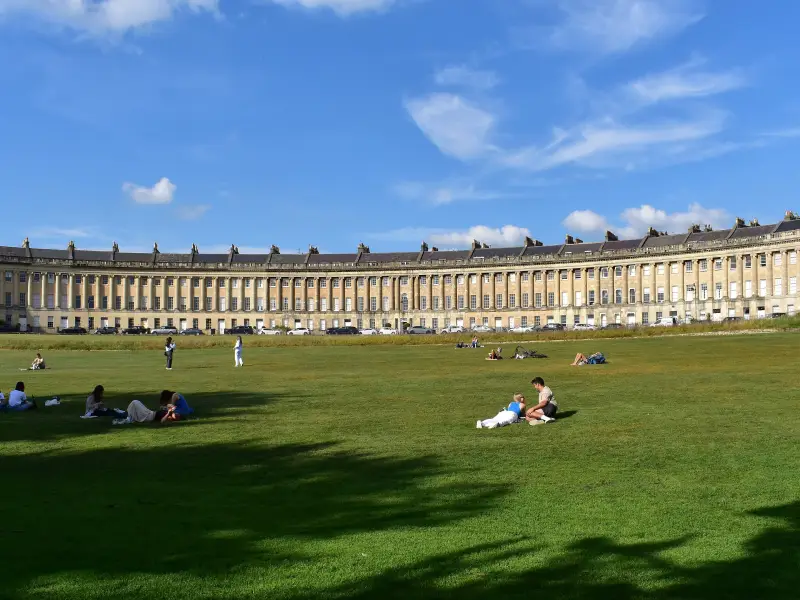

What changes for the owner
A conservation area is a place the council has designated for its special architectural or historic interest. The aim is to protect the character of the area as a whole.
For an owner, the main effect is on building work. Some changes that need no planning permission elsewhere do need it in a conservation area.
The rules below are for houses in England, and Wales has its own. Flats and maisonettes have no householder permitted development rights, so most outside changes need permission wherever they are.
Work that needs planning permission
On a house in a conservation area in England, the government's technical guidance says these are not permitted development. That means you need to apply for planning permission.
| Work | In a conservation area |
|---|---|
| Any extension beyond a side wall | Needs planning permission |
| A rear extension of more than one storey | Needs planning permission |
| A single-storey rear extension deeper than 3 metres, or 4 metres for a detached house | Needs planning permission. Elsewhere, prior approval allows up to 6 metres, or 8 metres detached; in a conservation area it does not |
| Adding storeys on top of the house | Needs planning permission |
| Cladding the outside in stone, render, timber, plastic or tiles | Needs planning permission |
| Roof extensions, such as dormers | Needs planning permission |
| An outbuilding between a side wall and the boundary | Needs planning permission |
| A chimney, flue or soil pipe on a wall or roof slope facing the road | Needs planning permission |
| A satellite dish on a chimney, wall or roof slope that faces the road and can be seen from it | Needs planning permission |
Sources: The General Permitted Development Order 2015, Schedule 2, Part 1, GOV.UK technical guidance, Planning Portal.
Demolishing a building in a conservation area can also need planning permission. If you are buying with plans to extend, check them with the council before you offer.
Check for an Article 4 direction
An Article 4 direction removes some or all permitted development rights in an area. Work it covers needs a planning application, even if it would otherwise be allowed.
Councils often use them in conservation areas. Depending on the wording, they can bring small changes into control, such as new windows, doors or a front wall.
Ask the agent, and check the council's website. Your conveyancer's local authority search should also show one.
Trees in a conservation area
You must give the council six weeks' notice before cutting down, topping, lopping or uprooting most trees in a conservation area. That gives the council time to decide whether to protect the tree with an order.
There is an exception for small trees. No notice is needed if the trunk is 75 millimetres across or less, measured 1.5 metres above the ground. Both rules apply in Wales too.
If a tree has a tree preservation order, you need the council's consent for most work instead. Cutting down or destroying a protected tree without it can lead to an unlimited fine.
Past work becomes your problem
Work done without permission does not go away when the home is sold. If the council takes enforcement action, the owner at the time has to put it right.
In England, the council usually has 10 years to act on building work finished on or after 25 April 2024, and 4 years for work finished before then. In Wales the limit is still 4 years.
Ask about any work done to the outside, such as new windows, doors, a roof or a porch, and when. Ask your conveyancer to check for permissions and building regulations sign-off.
If the home is also listed, consent covers the inside too, and there is no time limit on enforcement against old work: read what to know before buying a listed building.
How to check whether a home is in one
Your council's website will list its conservation areas, usually with maps. Your conveyancer's local authority search will also show whether the home is in one.
The government's planning data site holds more than 11,000 conservation area records for England, but it warns the data is incomplete, and some areas appear twice. If a home is not shown, check with the council.
Our free check looks up a home in England in that planning data, including Article 4 directions. If nothing is found, it says so rather than saying the home is not in one.
For a home in Wales, check the council's website, because the planning data we use covers England only.
If the home is in Wales
Wales has its own permitted development rules. On a house in a conservation area there, all of these need planning permission:
- Cladding the outside, or adding insulation to the outside walls
- Any extension of more than one storey
- A side extension reaching more than 3 metres beyond the side wall, or less than 1 metre back from the front
- Dormers and other roof extensions, roof lights, and taking down a chimney
- A new chimney or flue
- An outbuilding between a side wall and the boundary
- A satellite dish on a chimney, wall or roof slope that faces the road and can be seen from it
Sources: General Permitted Development Order 1995, Schedule 2, Part 1, as it applies in Wales, Welsh Government guidance.
Demolition is also stricter. Wales still requires conservation area consent to knock down most unlisted buildings in a conservation area, with exceptions for some small buildings and low walls.
Cadw says Wales has more than 500 conservation areas. Councils there can make Article 4 directions too, and Cadw gives cladding, new doors or windows, satellite dishes and solar panels as examples of what they can cover.
Sources: Historic Environment (Wales) Act 2023, section 161, TAN 24, Cadw.
Ask the agent
- Is the home in a conservation area, and is there an Article 4 direction?
- When were the windows, doors and roof last replaced, and was permission needed?
- Has any work been done to trees, and was the council given notice?
- Is there planning permission and building regulations sign-off for any extension?
Related questions
Can I replace the windows in a conservation area?
On a house it depends on whether an Article 4 direction applies, and on the council's rules for the area. Ask the council before you order new windows. In a flat, most changes to the outside need permission anyway.
Does a conservation area affect the value of a home?
We have not found a reliable source that measures this across England and Wales, so we give no figure. Compare sold prices of similar homes inside and outside the area. Our council pages give the median for each type of home.
Can a conservation area be created after I buy?
Yes. Councils can designate new conservation areas and change existing ones, and they can make new Article 4 directions. Ask the council whether any are planned for the area.
Sources
- legislation.gov.uk, The Town and Country Planning (General Permitted Development) (England) Order 2015, Schedule 2, Part 1
- GOV.UK, Permitted development rights for householders: technical guidance
- Planning Portal, Extensions: planning permission
- GOV.UK, Tree preservation orders and trees in conservation areas
- GOV.UK, Historic environment planning guidance
- GOV.UK, When is permission required? (Article 4 directions)
- GOV.UK, Ensuring effective enforcement
- Cadw, Understanding conservation areas
- legislation.gov.uk, The Town and Country Planning (General Permitted Development) Order 1995, Schedule 2, Part 1, as it applies in Wales
- Welsh Government, Planning permission: permitted development rights for householders
- Welsh Government, Technical advice note 24: the historic environment (updated 25 March 2026)
- legislation.gov.uk, Historic Environment (Wales) Act 2023, section 161
- legislation.gov.uk, Town and Country Planning Act 1990, section 171B
- planning.data.gov.uk, Conservation area dataset
- legislation.gov.uk, Town and Country Planning Act 1990, section 210