Which house survey do you need: Level 1, 2 or 3?
Level 1 suits a conventional home in reasonable condition. Level 2 suits the same homes when you want more detail and repair advice. Level 3 is for a large, older, run-down, unusual or altered home, or one you plan to change.
These are RICS's own descriptions. None of the three is the same as the valuation your mortgage lender orders.
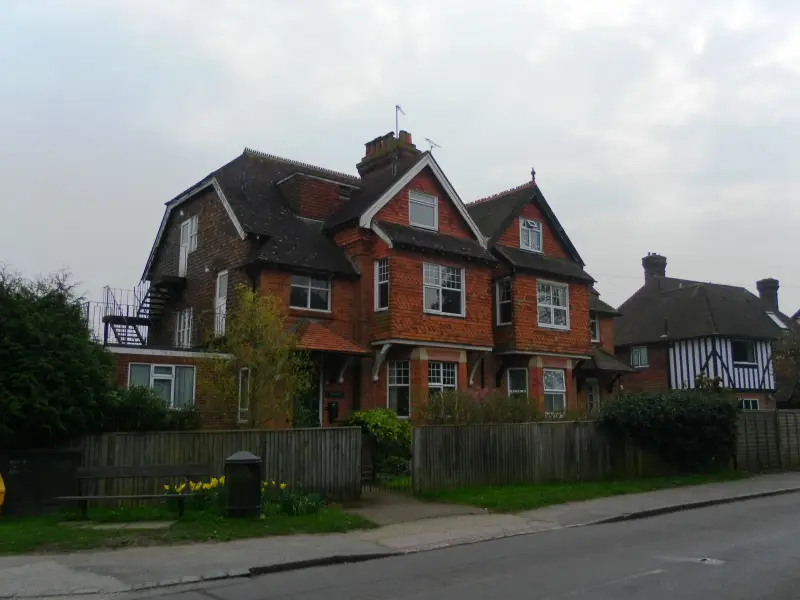

What each level includes
RICS publishes a description of each survey level, with standard terms of engagement. The main differences are how far the surveyor goes into the building and how much advice you get.
| What you get | Level 1 | Level 2 | Level 3 |
|---|---|---|---|
| Suits | A conventional house, flat or bungalow of common materials, in reasonable condition | The same kinds of home, when you want more detail | A large, older or run-down home, an unusual or altered building, or planned major works |
| Roof space | Seen from the hatch | Entered if safe | Entered if safe, with corners of the insulation lifted |
| Wiring, heating, drains | Visible parts only, no tests | Visible parts only, no tests | Seen working where allowed, but not tested |
| Repair advice | No | Yes, concise | Yes, with likely causes, the work needed and the risk of leaving it |
| Repair cost estimates | No | No | If agreed in advance |
| Market valuation | No | Only in the survey and valuation version | No |
| Flats: drains, lifts, fire alarms and security systems | Not inspected | Not inspected | Inspected within the flat's boundary, with no specialist tests |
| Enquiries about contamination | No | No | Yes |
Sources: RICS Level 1, Level 2, Level 3, Helping you choose the right survey.
Which level fits the home you are buying
RICS describes the homes each level is for, but it does not set ages or sizes. The table below is our reading of its words for common cases. If two rows apply, take the higher level.
| If the home is | Consider | Why |
|---|---|---|
| Conventional, of common materials and in reasonable condition | Level 1 or 2 | RICS's description for both. Level 1 gives no repair advice |
| As above, and you want to budget for repairs and upkeep | Level 2 | Adds advice on repairs and future maintenance |
| As above, and you want the surveyor's view of the price | Level 2 with valuation | The only level that includes a market value |
| Large, older or visibly run-down | Level 3 | RICS names all three |
| Extended, converted or with walls removed | Level 3 | RICS names altered buildings |
| Thatched, timber-framed, listed or of unusual construction | Level 3 | RICS names unusual buildings |
| A home you plan to extend or renovate | Level 3 | RICS names planned major works |
The energy certificate gives the age band of the home, which our free check shows. If the home is listed, read what to know before buying a listed building as well.
In some areas most homes for sale are old. By the age band on their certificates, 75% of homes put up for sale in BS6 (Bristol) were built before 1930, 72% in CF24 (Cardiff) and 70% in L15 (Liverpool), against 24% across England and Wales.
Certificates lodged for homes marketed for sale from 1 October 2024 to 30 September 2026, worked out by UK Property Check from the energy certificate register.
The age band is the assessor's estimate. Each district page shows its own figure.
RICS suggests its Level 3 survey for a large, older or run-down property, but it does not say how old counts as older. Our reading: a home built before 1930 qualifies, so many buyers in districts like these should consider Level 3.
If you are unsure between two levels, ask the surveyor which they would choose for this home, and why. RICS says Level 3 costs more because it gives detailed information about the structure and fabric.
A survey is not a mortgage valuation
RICS says your lender's valuation report is not a survey. It tells the lender whether the home is reasonable security for the loan. A survey tells you about the condition.
GOV.UK says the valuation does not protect you if something goes wrong with the home, and may not include a physical inspection at all.
Sources: RICS, GOV.UK, How to buy a home.
What no survey covers
Every level is a visual inspection. Under RICS's descriptions, the surveyor does not:
- Lift carpets or floorboards, move heavy furniture, empty cupboards or open secured panels
- Test the wiring, gas, heating, plumbing or drains, or look inside chimneys, boilers and flues
- Inspect the external wall system of a block of flats
- Carry out an asbestos inspection, though suspected asbestos should be reported
- Comment on legal documents, though the surveyor may flag points for your conveyancer
If the report recommends further investigation, book it before you exchange. That might be an electrician, a heating engineer, a drainage survey or a structural engineer.
A survey also does not replace the searches your conveyancer orders. See what searches are done when you buy a house.
How to read the condition ratings
At every level, the report rates each main part of the home on the same scale.
| Rating | RICS meaning | What to do before exchange |
|---|---|---|
| 3 | Serious defects, or ones needing urgent repair, replacement or investigation | Get written quotes, as RICS advises, then decide whether to renegotiate |
| 2 | Defects needing repair or replacement, but not serious or urgent | Price the work so it is in your budget |
| 1 | No repair needed now, but normal maintenance still applies | Nothing beyond normal upkeep |
| NI | Not inspected | Ask why, and whether it needs a further look |
| R | Documents the surveyor suggests you ask for before you sign contracts | Pass the list to your conveyancer |
Sources: RICS Level 1, Level 2.
What to tell the surveyor before the visit
RICS's standard terms ask you to tell the surveyor the agreed price and any particular worries, such as a crack or a plan to extend.
- The price you agreed, and anything that made you offer less
- Cracks, damp patches or smells you noticed at the viewing
- Extensions, loft conversions, removed walls or new windows, with dates if you know them
- Work you plan to do after you move in
- For a flat, anything the agent said about planned major works
Our house viewing checklist helps you note these as you go round.
What a survey costs
Surveyors set their own fees, so get more than one quote for the same level. Reallymoving's figures for England in November 2025 put the average survey at £462 for first-time buyers and £510 for home movers.
Those averages are for a Level 2 survey, so expect a Level 3 to cost more. Under RICS's terms, the survey is carried out by an AssocRICS, MRICS or FRICS member, so check the surveyor's status before you book.
RICS is revising its Home Survey Standard. Until the second edition takes effect, its members work to the first, in force since 1 March 2021. In September 2026, RICS said it intends to publish the new edition in the first quarter of 2027.
Sources: Which?, Today's Conveyancer, RICS, Home survey standards, RICS, September 2026 update.
Our guide to the cost of buying a house adds the survey to the tax, legal fees and removals for a typical purchase.
Ask the surveyor
- Which level would you recommend for this home, and why?
- Will you go into the roof space and any cellar?
- Can you estimate the cost of any repairs you find?
- If you recommend a further investigation, how soon should it be done?
- Are you an RICS member, and will you carry out the inspection yourself?
Related questions
What should I do if the survey finds a serious problem?
RICS says to get written quotes for any repair rated 3 before you commit to buying. Nothing is binding until exchange, so you can renegotiate or withdraw, but only change your offer when the problem justifies it.
Will the surveyor test the boiler and the wiring?
No. At every level the surveyor looks only at the visible parts of the services and does not test them, so the report cannot tell you whether the gas or electrics are safe. Book a specialist for that.
Does a home survey include a valuation?
Only the Level 2 survey and valuation version. It adds the surveyor's opinion of the market value, a figure for rebuilding the home for insurance and a list of problems that may affect the value.
Sources
- RICS, Helping you choose the right survey
- RICS, Description of the RICS Home Survey Level 1
- RICS, Description of the RICS Home Survey Level 2 (survey only)
- RICS, Description of the RICS Home Survey Level 3
- RICS, Home survey standards
- RICS, Home Survey Standard 2nd edition: September 2026 update
- GOV.UK, How to buy a home
- Which?, The cost of buying a house (Reallymoving data, November 2025)
- Today's Conveyancer, Cost of moving jumps 27% in a year, with conveyancing costs up 8% (19 November 2025)